ArabesQ Advisory · AI Governance · Change · Risk

Your team is already using AI. The only question is whether it’s safe.

Most organizations didn’t decide to adopt AI. It arrived — one employee, one browser tab at a time — and now sensitive information is moving through tools nobody approved and no policy covers.

That is the gap I close — not with a lecture about the future of technology, but with a written policy, a prepared staff, and a governance process your board can stand behind.

Start with the $1,250 Organization License, add the $1,950 Kit + Implementation Session, or engage ArabesQ Advisory directly for higher-level governance support.


The problem

Three things are true in almost every organization right now

Your staff are using AI you never approved.

Not out of defiance — out of workload. They are pasting client records, budgets, and case notes into free tools, and no one has told them where the line is.

Your policy, if you have one, was written by someone who doesn’t do the work.

A downloaded template nobody read protects you legally in theory and operationally not at all.

Your most experienced people are the most afraid.

The staff with the deepest institutional knowledge are the ones quietly convinced this technology is here to replace them. Ignore that and adoption stalls no matter what you buy.


A practical place to start

Need governance now, but not a full advisory engagement?

The AI Governance Starter Kit — Organization License gives leadership a practical first layer of governance: policy language, staff boundaries, tool approval, risk review, and a structured implementation path.

It is designed for smaller organizations whose staff are already using AI and whose leaders need usable rules before informal adoption becomes organizational risk.

Prefer guided implementation? The $1,950 AI Governance Starter Kit + Implementation Session includes the complete Organization License plus a short pre-session leadership questionnaire and one 60-minute virtual implementation session for up to five leadership or implementation participants — guided implementation priorities, identification of responsible owners, a recommended implementation sequence, and a brief written action recap.


What I do

When you need ArabesQ at the table

The Starter Kit establishes a strong first layer. These engagements are for organizations that need interpretation, customization, leadership alignment, deeper readiness work, or continuing governance support.

Briefing

$3,500

2 hours · up to 25 people

A focused leadership engagement that frames the organization’s AI risks, clarifies priorities, and identifies practical next steps. Designed for leaders who need expert interpretation before making policy, tool, or implementation decisions.

Readiness Package

$14,500

Full day · leadership and staff tracks

A deeper AI readiness and governance engagement: broader assessment, risk review, policy and process recommendations, and an implementation roadmap for organizations that need more than a single policy or briefing.

Ongoing advisory. Some organizations need continuing governance and decision support, not a one-time engagement. Ongoing Advisory begins at $4,500/month and is scoped to the organization’s governance needs.

50% deposit confirms the date. Virtual or on-site; travel beyond 30 miles billed at cost plus $750/day. Participants above 25 are $75 each. A limited community rate is available for small nonprofit and faith-based organizations.


The framework

The ArabesQ AI Readiness Framework

  1. Assess Where AI is already in use across your organization, and what it exposes.
  2. Govern Written policy, approval paths, and clear accountability for who decides what.
  3. Equip Staff trained on safe, practical daily use, in the language of their own jobs.
  4. Sustain A review cadence that survives staff turnover, new tools, and changing rules.

Most organizations skip straight to Equip — buy the licenses, run a single training session, and hope. That is why adoption stalls. The order matters.


Equitable adoption

Technology change is never distributed evenly

AI adoption moves fastest for the staff who were already the most confident with technology, and slowest for the people an organization can least afford to lose — long-tenured employees, frontline and shift workers, multilingual teams, and anyone who built their expertise before these tools existed. Govern only for the fastest adopters and you produce a policy that is equitable on paper and a two-tier workforce in practice.

Equitable spaces

Sessions are designed so the least technical person in the room can participate without embarrassment. Confidence is a prerequisite for safe use, and it has to be built deliberately.

Diverse ecosystems

Policy that accounts for the organization you actually have: varied languages, literacy levels, accessibility needs, job classifications, and tenure — not an idealized user.

Measured, not assumed

Adoption and comprehension reviewed across your real demographics, so gaps surface while there is still time to close them rather than after a grievance.

Where AI touches decisions about people — hiring, benefits, case triage, service eligibility — governance must include bias and disparate-impact review. That is compliance work, and it is the step most technology consultants leave out.


Who I work with

Who I work with

  • City and county departments navigating public records, transparency, and staff use
  • Clinics and healthcare groups where patient data and AI tools are already colliding
  • Nonprofits and foundations with lean teams and real donor-data obligations
  • Mid-market employers whose staff adopted AI faster than leadership noticed
  • Boards and executive teams who need to answer “what is our policy?” with an actual document

About

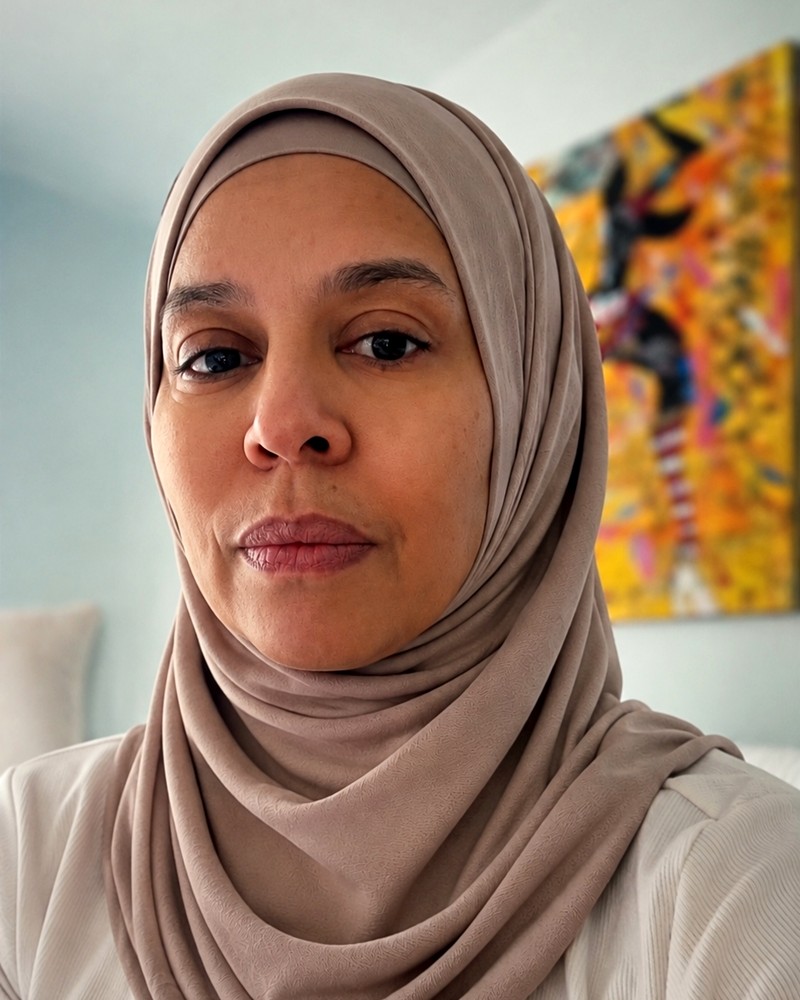
Saliymah Jones, Principal of ArabesQ Advisory

Why me

I have spent nearly four decades in process, application, and facilitation work — inside engineering companies, in business, and in educational settings, nationally and internationally. Long enough to learn how work actually moves through an organization rather than how the org chart says it does.

Then I worked both sides of the desk. In Saudi Arabia, at the University of Business and Technology, I wrote the standard — I authored the accreditation framework for the university’s preparation program under a British international accrediting body, and then assessed programs against it. In Washington State I served as Diversity, Equity & Inclusion and Accreditation Administrator for the City of Bellevue from 2022 to 2024, and I administered federally funded workforce programs — WIOA and the Trade Act — for the Washington State Employment Security Department in Everett, carrying programs through local, state, and federal monitoring with satisfactory results.

So I know what a reviewer asks for, and I know what it costs to answer. I have sat in both chairs.

Much of that work was done standing in front of a room during periods of change, and keeping that room steady.

I have now watched five technology waves arrive. Each was going to replace everyone. What happened instead, every time, is that the organizations that governed the change came through stronger, and the organizations that let it happen to them spent years recovering.

I use AI every day in my own practice. I am not afraid of it, and I am not selling it. My work is to make certain this wave moves your organization forward without leaving any part of your workforce behind.

— Saliymah Jones, Principal, ArabesQ Advisory


FAQ

Frequently asked questions

We already told staff not to use AI. Isn’t that enough?
No — and it’s the highest-risk position an organization can hold. A ban you can’t enforce means usage continues without visibility, training, or a record. You’ve removed your ability to see the problem, not the problem.
Do you sell or implement AI tools?
No. I have no vendor relationships and no software to sell you. That independence is the point — my recommendations aren’t attached to anyone’s license revenue.
Is this technical?
Not at all. Sessions are built for the people who do the work: administrators, case managers, clinicians, front-desk staff, and directors. No coding and no jargon — the material is delivered in the language of their own roles.
Can you do this virtually?
Yes, at the same price. On-site is available nationwide with travel billed at cost.
We’re a small nonprofit and that’s outside our budget.
Please ask about the community rate. A limited number of engagements are reserved each year for small nonprofit and faith-based organizations, and the initial conversation is always at no cost.
How fast can you get here?
A briefing can typically be scheduled within three weeks. A 50% deposit holds the date.

The policy conversation is easier before the incident than after

Twenty minutes, at no cost. Tell me what your team is already doing with AI, and I will tell you candidly whether you have a risk worth addressing — and whether I am the right person to address it.

saliymah@arabesqadvisory.com 425-312-3736